
About us

About us


Introduction

Research Center on Flood & Drought Disaster Prevention and Reduction of the Ministry of Water Resources (CDPR) ‘s position is that serve the Ministry of Water Resources, river basin, provincial and municipal flood and drought disaster prevention departments, provide decision-making scientific and technological support and technical services for flood control, drought relief and disaster reduction, and carry out scientific and technological achievements transformation and technical exchange training.

The goal of the disaster reduction center (Defense center) is to become a high-level support support center for flood control, drought relief and disaster reduction, a high-level decision support center, a high-impact science and technology innovation center, a high-efficiency information exchange center, a high-quality talent training center, and a high-yield technology transformation center.

  • 160+
    Technical Achievements
  • 90+
    Awards
  • 60+
    Academic Monographs
  • 80+
    Invention Patents
Research Center on Flood & Drought Disaster Prevention & Reduction

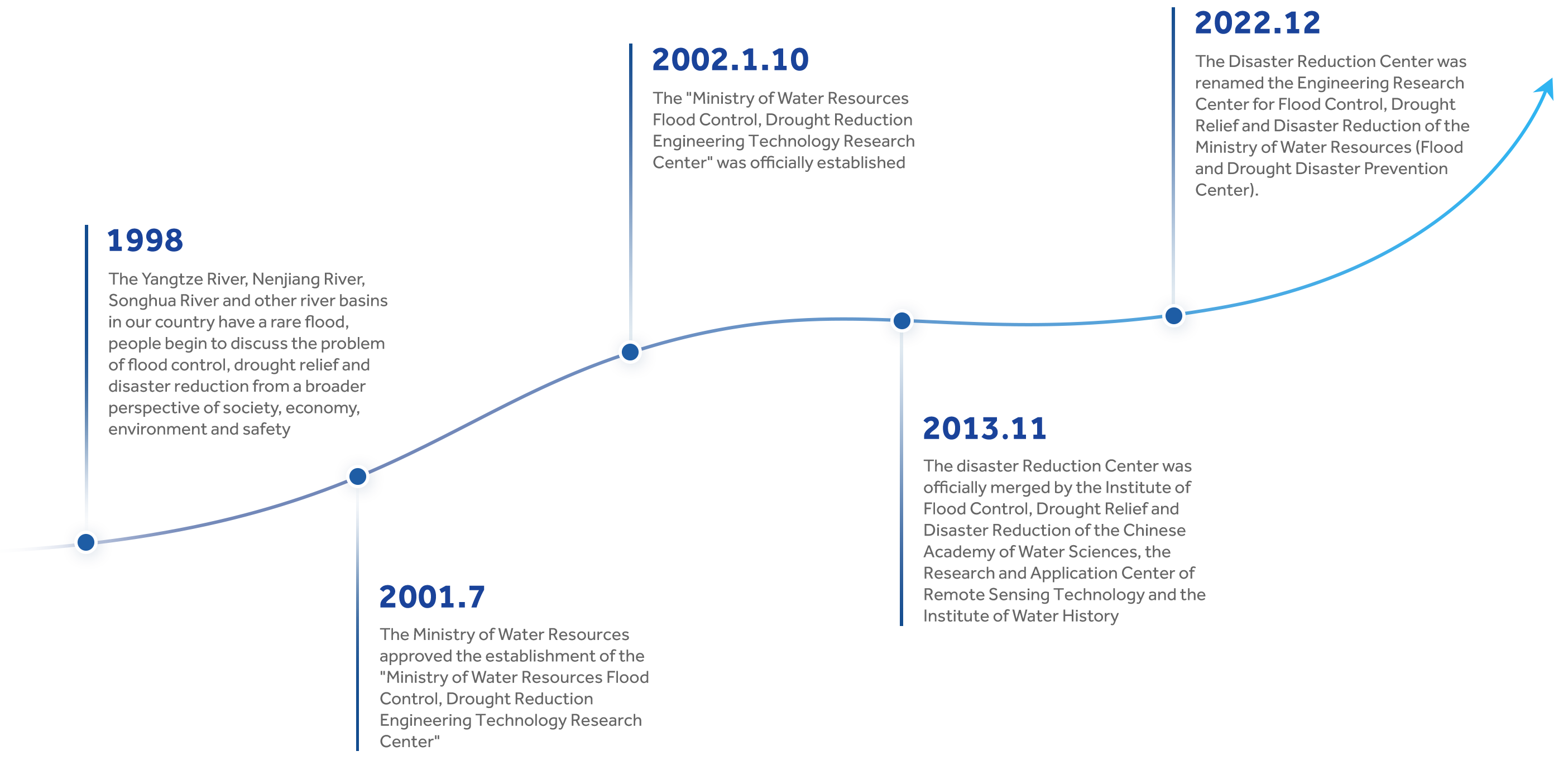
History

Leaders

Peng Jing
President and Party Secretary of China Institute of Water Resources and Hydropower Research (IWHR), Professorate Senior Engineer, Ph.D. in Engineering.
Director of the Remote Sensing Technology Application Center of the Ministry of Water Resources and CDPR (Defense Center)
Born in January 1966, Professorate Senior Engineer, Ph.D. in Engineering. Currently serves as President and Party Secretary of IWHR, concurrently Director of the International Research and Training Center on Erosion and Sedimentation, Director of the Remote Sensing Technology Application Center of the Ministry of Water Resources and CDPR (Defense Center), Vice Chairman of the International Cooperation and Exchange Working Committee and the Disaster Mitigation Committee of the Chinese Hydraulic Engineering Society, and Vice Chairman of the China National Committee on Irrigation and Drainage. Has held various research management and functional management positions, with rich experience in international cooperation, graduate education, infrastructure, safety production, publicity, logistics, and platform construction. Organized and participated in the compilation of the Ministry’s “14th Five-Year Plan” for water conservancy scientific and technological innovation, the survey report on 100 rural water supply projects nationwide, and IWHR’s special “14th Five-Year” plan. Led cross-disciplinary research on integrated mountain-river-forest-farmland-lake-grassland system governance, national river and lake happiness index assessment, and consultation for the Pazhi Hydropower Project and supporting irrigation areas on the Doxong Tsangpo River in Tibet. Continuously strengthens the integration of systematic water governance with territorial spatial planning and ecological space management, enhancing technological support for modernizing water governance capabilities in the new era. Initiated special studies on river and lake ecological flow, ecological water conservancy engineering, lake and reservoir dredging, and rural drinking water safety. With an international and long-term vision, has been promoting IWHR to become a world-class research institute for over 15 years—organizing World Water Forum sessions, releasing the world’s first "World River Happiness Index Report" on World Water Day, proposing the creation of the international journal "River", and collaborating with UNESCO to introduce the "Water Knowledge Reader" into schools along the Belt and Road Initiative.
Qian Feng
Deputy Director, CDPR (Defense Center) / Professorate Senior Engineer
CPC member, Professorate Senior Engineer. Appointed Deputy Director of CDPR (Defense Center) in March 2025; previously Deputy Director of the Information Center of the Ministry of Water Resources from November 2017 to February 2025. Concurrently serves as Chairman of the Water Informatics Professional Committee of the Chinese Hydraulic Engineering Society.
Long engaged in water resources cybersecurity, informatization guidance, hydrological forecasting, and technical support for water and drought disasters. Led the formulation of the digital twin water conservancy standard system; presided over the compilation of technical standards such as "Technical Guidelines for Digital Twin River Basin Construction" and "Hydrological Forecasting Standards"; and developed key documents including the "Overall Plan for the Construction of Digital Twin River Basins during the 14th Five-Year Plan", the "National Digital Twin Water Conservancy Construction Project Plan", and the "Management Measures for Co-construction and Sharing of Digital Twin River Basins". Organized nationwide pilot projects for digital twin river basin construction, the “sky-space-ground-water-engineering” integrated monitoring and perception initiative, the Ministry’s digital twin platform (national water resources map), demonstration applications of the “four pre-” (forecast, early warning, rehearsal, and pre-plan) flood control system, and the national river and lake chief system information platform. Led multiple national key R&D programs and major water conservancy research projects. Serves as editor-in-chief of the journals "Hydrology" and "Water Situation Yearbook".
Awarded 4 first prizes and 1 second prize at provincial/ministerial-level science and technology awards.
Wu Zezbin
Senior Engineer, currently Deputy Director of the Remote Sensing Technology Application Center and CDPR (Defense Center) of the Ministry of Water Resources.
Worked at Hubei and Guangdong provincial water resources and hydropower survey and design institutes from 2005 to 2008. From 2008 to 2019 served successively in the National Flood Control and Drought Relief Headquarters Office, General Office, Soil and Water Conservation Department, and Water and Drought Disaster Defense Department of the Ministry of Water Resources. Served as Division Director of the Water and Drought Disaster Defense Department from 2019 to 2024. Long engaged in flood control and drought relief work; organized the national flash flood disaster prevention project, nationwide water and drought disaster risk census, and national flood risk mapping projects; conducted flood and drought disaster statistics and emergency technical support. Compiled multiple plans including the "National Flash Flood Disaster Prevention Project Implementation Plan (2021–2023)" and the "National Key Area Flood Risk Mapping Implementation Plan (2024–2025)". Served as an expert in the State Council investigation team for the July 20, 2021 Zhengzhou rainstorm disaster in Henan Province and participated in numerous major disaster investigations, emergency responses, and post-event reviews. Co-authored 5 books, contributed to multiple industry standards including the "Technical Guidelines for Cemented Granular Material Dam Construction", published 17 related papers, and received 1 provincial/ministerial second prize for scientific and technological progress.
Yang Kun
Professorate Senior Engineer, currently Deputy Director of CDPR (Defense Center) at IWHR, concurrently Director of the Natural Disaster Monitoring Department of the National Remote Sensing Center, Executive Vice President of the Disaster Prevention and Emergency Equipment Technology Branch of the China Water Enterprises Association, Secretary-General of the Water Resources and Hydropower Risk Management Professional Committee of the Chinese Hydraulic Engineering Society, and Deputy Secretary-General of the editorial board of "China Flood Control and Drought Relief" magazine.
Worked at the National Flood Control and Drought Relief Headquarters Office from 1991 to 2017, serving as Director of the Technology and Information Division in 2014; served as Deputy Chief Engineer at the Pearl River Water Resources Commission from 2012 to 2014; joined IWHR in 2017, engaging in technical management in flood control and drought relief, water informatization, water remote sensing, and water conservancy history.
Drafted key documents including the "National Flood Control and Drought Relief Emergency Plan", the "National Flash Flood Disaster Prevention Plan", the "11th Five-Year Plan for National Flood Control and Drought Relief", and revisions to water and drought disaster classification and warning standards. Led the construction of Phase II of the National Flood Control and Drought Relief Command System.
As lead, completed two association standards: "Integrated Flood Control, Drainage and Drought Relief Pump Truck" and "Technical Guidelines for UAV System Application in Rivers, Lakes and Reservoirs". Presided over or participated in drafting multiple industry standards including "Requirements for Anti-Terrorism Prevention in the Water Sector", "Guidelines for Flood Impact Assessment Reports", "Acceptance Standards for Flood Control Reserve Materials", and "Guidelines for Flood Operation Plans".
Served as technical leader or key member in emergency responses such as the 2007 glacial lake outburst in Dingjie County, Xigaze, Tibet; the 2009 Yarlung Tsangpo barrier lake in Motuo, Tibet; and the 2010 Zhouqu debris flow and barrier lake emergency response in Gansu.
First author/translator of books including "Flood Control and Emergency Technical Manual", "Leaving No One Behind – UN World Water Development Report 2019", and "Urban Water Security: Risk Management"; published over 30 papers.
Honored as National Advanced Worker by the State Council, National Water System Advanced Worker by the Ministry of Human Resources and Social Security and Ministry of Water Resources, and recipient of the May 1st Labor Medal of Central Government Organs.
Yan Denghua
Director, Institute of Remote Sensing / Professorate Senior Engineer
Professorate Senior Engineer (Level II), Ph.D., doctoral supervisor. Recipient of the Ho Leung Ho Lee Fund Prize for Scientific and Technological Innovation, National Advanced Worker, National Outstanding Youth Fund, China Youth Science and Technology Award, and National May 1st Labor Medal. Selected into the National Ten Thousand Talents Plan as a leading talent and enjoys special government allowance from the State Council. Currently Chief Engineer of CDPR (Defense Center) and Director of the Institute of Remote Sensing Technology Application at IWHR.
Long engaged in water security and water resources research. Since the 10th Five-Year Plan, has led or participated in over 100 national and industry-level research and consulting projects, compiled over 10 major national science and technology plans, and provided consultation for over 110 major projects. Currently leading one national key R&D project, one NSFC key project, one major Ministry of Water Resources project, and several local and enterprise consulting projects. Developed the Global Water Resource Simulator, established new theories and technologies such as nature-function coordinated basin construction, drought-flood ensemble response based on “three-layer risk” assessment, and drought-limit water level determination for rivers and reservoirs, which have been widely applied. Currently conducting in-depth research on extreme hydrological events, climate-hydrology-ecology-sediment scenario simulation, and adaptive regulation. Serves as a member of the Expert Consultation Committee for follow-up projects of the South-to-North Water Diversion and an expert of the overall group for the 14th Five-Year Plan key R&D program on “Major Natural Disaster Prevention and Public Safety.”
Has supervised or co-supervised over 180 master’s, doctoral, and postdoctoral students; published over 400 SCI/EI papers and obtained over 200 authorized patents; received 2 second prizes of the National Scientific and Technological Progress Award and over 20 provincial/ministerial awards. Selected as a national candidate of the Hundreds and Thousands of Talents Project and a leading talent in water conservancy; honored as National Outstanding Scientific and Technological Worker and National Youth Post Expert.
Liu Changjun
Director, Institute of Disaster Mitigation / Professorate Senior Engineer
Ph.D. in Engineering, Professorate Senior Engineer. Currently Director of the Institute of Flood Control and Drought Relief at IWHR, concurrently head of the technical department of the National Flash Flood Disaster Prevention Project Group, Secretary-General of the Remote Sensing Professional Committee of the Chinese Hydraulic Engineering Society, Deputy Secretary-General of the Emergency Early Warning Working Committee of the China Association for Disaster Prevention, and Vice Chairman of the Water Resources Information Working Committee of the China Geographic Information Industry Association. Awarded IWHR Outstanding Young Talent in 2020 and National Advanced Individual in Water and Drought Disaster Defense in 2021; core member of the Ministry’s Water and Drought Disaster Defense Strategy and Risk Management Innovation Team.
Mainly engaged in R&D on flash flood disaster prevention, flood control and disaster mitigation, remote sensing hydrology, and digital twin river basins. Has led over 100 research and production projects, including the World Bank loan project “China Flood Risk Prevention and Emergency Management Mechanism Research” and the 13th Five-Year Plan national key R&D topic “Spatial-temporal Variable Source Flash Flood Simulation Model and Parameter Regionalization Research.” Led the Shandong Province Key River Basin Flood Control Joint Operation Decision Support Service Project (contract value 202.3 million RMB), explored digital twin river basin construction solutions, and developed multiple software platforms and key technologies that have been demonstrated in the Huai River, Hai River, Dawen River, and Yishu River digital twin basin constructions.
In recent years, fully participated in the construction management and technical R&D of the national flash flood disaster prevention project. As an expert of the State Council investigation team, participated in the review and analysis of the July 20, 2021 Zhengzhou rainstorm disaster in Henan. Co-authored 8 books, chief editor of 1 industry standard; published over 160 papers (over 50 in SCI/EI journals); obtained over 20 software copyrights and 20 patents; received 13 provincial/ministerial awards and 8 departmental awards.
Zhang Cheng
Director, General Office / Professorate Senior Engineer
CPC member, currently Director of the General Office of CDPR (Defense Center), member of the Management Committee of the International Conference on Flood Management (ICFM), Director of the ICFM Permanent Secretariat, Professorate Senior Engineer and Ph.D. at IWHR. Has led or served as topic leader for over 10 national-level projects, over 20 provincial- or municipal-level projects, and participated in 5 international cooperation projects. Published over 40 academic papers, authored 5 monographs and translated 4 books. Received 2 Dayu Water Conservancy Science and Technology Progress Awards and 1 Environmental Protection Science and Technology Award. Holds over 10 invention and utility model patents. Expert member of the IEC Standards Committee on Smart City Water Science. Editorial board member and reviewer for several SCI journals. External master’s supervisor at Delft University of Technology (Netherlands), Zhengzhou University, and Xi’an University of Technology.

Departments

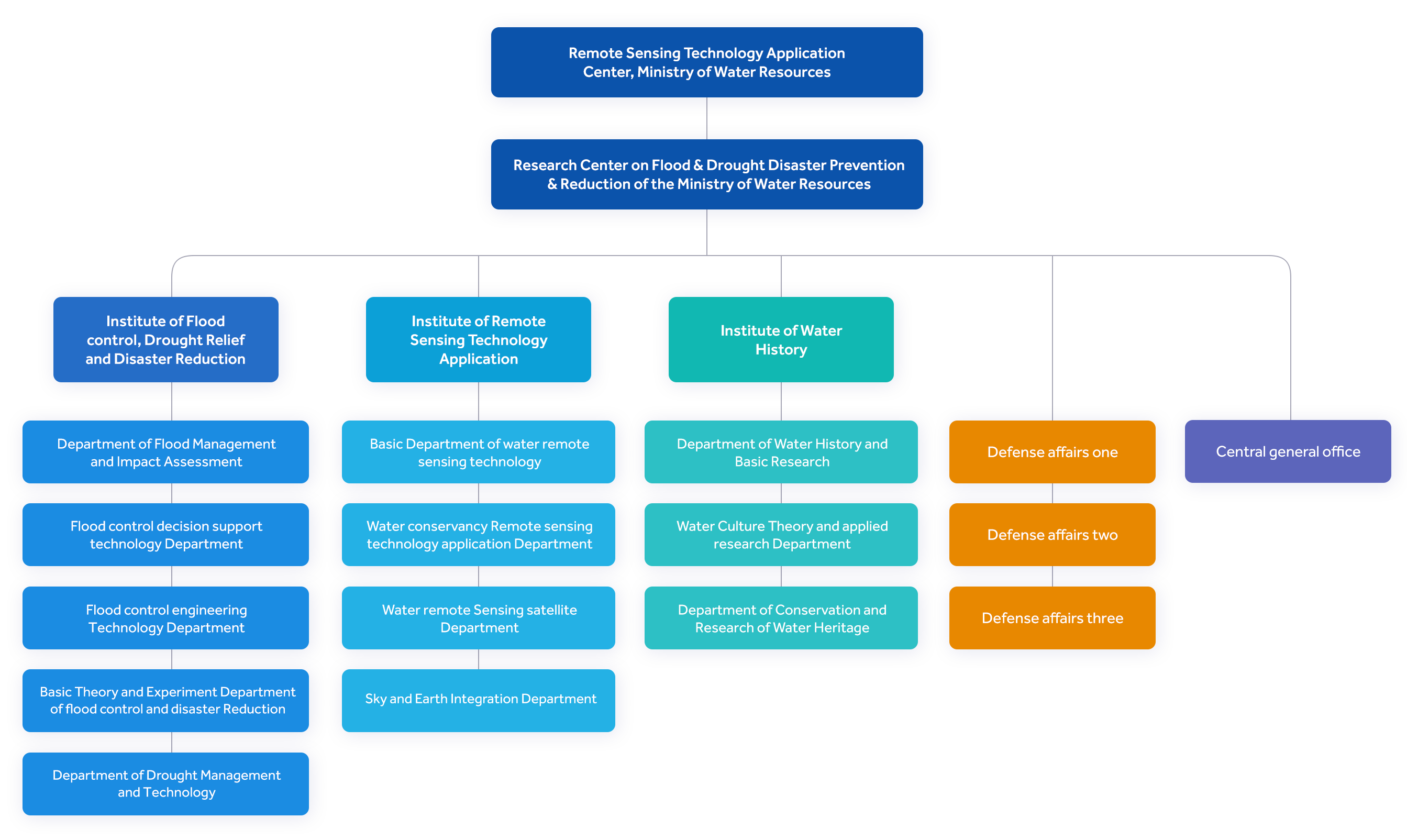
洪水管理与影响评价研究部

研究方向:

洪水管理理论:洪水风险管理理论、洪涝灾害成灾机理及演变规律、洪水保险理论等。
洪水管理方法:风险分析、风险评价、情景分析、成本效益分析、多目标优化决策等。
洪水影响评价:洪水影响评价法规制度、洪水影响评价标准规范、洪水影响评价技术等。
防洪减灾对策:洪水管理政策法规、洪水管理制度、防洪安全战略与规划、洪涝灾害防治对策、防洪减灾技术标准体系,全民社会化减灾等。

洪水管理与影响评价研究部

研究方向:

洪水管理理论:洪水风险管理理论、洪涝灾害成灾机理及演变规律、洪水保险理论等。
洪水管理方法:风险分析、风险评价、情景分析、成本效益分析、多目标优化决策等。
洪水影响评价:洪水影响评价法规制度、洪水影响评价标准规范、洪水影响评价技术等。
防洪减灾对策:洪水管理政策法规、洪水管理制度、防洪安全战略与规划、洪涝灾害防治对策、防洪减灾技术标准体系,全民社会化减灾等。

防汛决策支持技术研究部

研究方向:

洪水分析模型与技术研究:洪水分析的水文学及水动力学模型及软件产品开发等。
防洪决策支持技术研究:降雨径流及洪水预报,水库汛期水位动态控制与调度,江河防洪工程体系联合调度,溃坝(堤)洪水快速分析,洪水影响快速评估,防汛决策支持系统整体解决方案设计与系统研发等。
洪水风险图编制与管理技术研究:洪水风险图技术标准制订,洪水风险图制作通用软件开发,洪水风险图编制,洪水风险图汇集、管理与应用等。
高新技术的集成应用研究:地理信息系统、遥感、数据库等新技术、新方法的防汛业务集成应用研究等。

防洪工程技术研究部

研究方向:

防洪工程安全评价与风险管理:堤坝安全状态分析评估理论、方法和技术,堤坝溃决机理及模式,堤坝可靠性和失事概率分析,穿堤工程防洪安全影响评价,防洪工程安全管理等。
防汛抢险技术与装备研究开发与推广:应急抢险救生、隐患快速探测、崩岸抢护、管涌抢护、应急子堤、应急泄流、快速堵口技术及装备的研发与推广等。
山洪灾害防治:山洪灾害风险分析与评估、防治策略及规划、小流域暴雨洪水及预警指标确定、监测预警系统规划设计及专用产品研发、工程治理技术。全国山洪灾害监测预报预警平台管理与应用、监测预警信息及调查评价数据管理、山洪灾害事件调查等。

防洪减灾基础理论与试验研究部

研究方向:

城市地表水流与管网水流的交互机理研究
堰塞湖的溃决机理及过程模拟研究
洪水的冲击破坏力试验研究

抗旱管理与技术研究部

研究方向:

旱情监测预警技术:旱情实时监测、遥感旱情监测、旱情动态评估、旱情预警模型、土壤墒情监测设备和技术、水文干旱特征值研究等。
干旱灾害风险研究:旱灾损失评估、干旱频率分析、旱灾风险评估、干旱区划图绘制、旱灾风险图绘制、旱灾风险管理战略等。
抗旱决策支持技术:抗旱减灾综合数据库构建、旱情监测预警系统设计开发、抗旱指挥系统系统设计开发、旱灾风险评估系统设计开发等。
应急预案编制技术:抗旱预案编制、应急调水预案编制、突发性水污染预案编制等。
抗旱标准、政策和规划研究:抗旱减灾技术标准体系、抗旱减灾制度政策法规研究、抗旱规划编制、抗旱减灾培训教材编制等。
抗旱减灾其他研究方向:抗旱效益评估、抗旱节水技术、应急调水补偿机制研究、灾害信息共享等。

水利遥感技术基础部

研究方向:


水利遥感技术应用部

研究方向:


水利遥感卫星部

研究方向:


天空地一体化部

研究方向:


水利史与基础研究部

研究方向:


水文化理论与应用研究部

研究方向:


水利遗产保护研究部

研究方向:


防御事务一处

职能职责:

综合规划、方案预案编制和有关政策、法规、制度、标准的研究、起草、评估、抗旱以及专家管理等有关工作。

防御事务二处

职能职责:

流域防洪事务,现场调查、复盘分析以及“四预”技术应用相关工作。

防御事务三处

职能职责:

蓄滞洪区建设管理评估及运用补偿、洪水影响评价、山洪灾害防治、洪水风险管理等有关工作。

中心综合办公室

职能职责:

1. 办公室主任负责组织制定办公室规章制度和工作细则、办公室人员分工及考核,制定年度工作计划并于年底向中心领导报告工作。
2. 负责中心的日常管理事务,包括行政、财务、科研管理等。
3. 配合科技委员会、职称评审委员会、专业技术岗位评审委员会、质量管理委员会和保密管理委员会做好相关工作。
4. 完成中心领导交办的其它工作。